
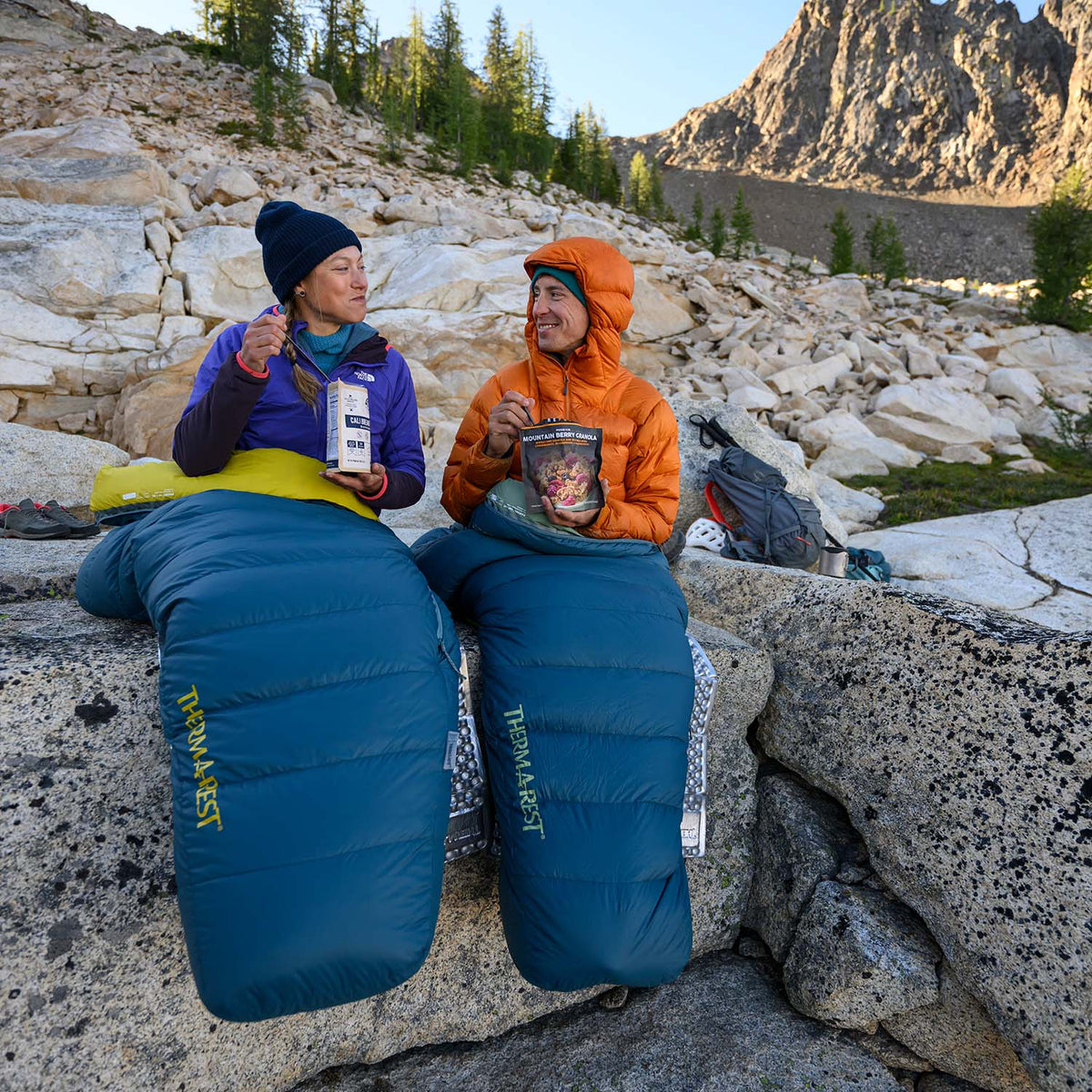
Choosing a sleeping bag feels simple until you start comparing temperature ratings, fill types, and shapes, and realise there may be more to it than you thought. Get it right, though, and a good night's sleep becomes one less thing to worry about on your trip. But choosing the wrong one can turn even the best-planned adventure into a cold, sleepless slog.
To help you out, our sleeping bag guide runs through the key considerations, including how where you're headed makes a difference, how temperature ratings actually work, down versus synthetic fill, and which shape will suit your build and your trip.
How Your Trip Type Can Affect Your Sleeping Bag Choice
First, your sleeping bag should match your activity and the season, as they can vary widely in intended use.
For backpacking, weight and pack size matter most since you're carrying everything on your back. Car camping gives you more flexibility, as you're not lugging gear far, so a bulkier, more comfortable bag will be preferable. However, alpine or winter expeditions call for something at the specialist end of the scale, built to handle sustained sub-zero temperatures and, often, damp or wet conditions.
A three-season bag suits most UK camping from late spring to early autumn. For early spring, late autumn, high ground, or the Scottish Highlands (where nights can drop below freezing), choose a bag with a lower comfort rating, and use a winter-rated bag for proper cold-weather trips.
Understanding Sleeping Bag Temperature Ratings
Temperature ratings are the most useful, and most misunderstood, aspect of any sleeping bag, so it’s worth understanding these correctly.
What Are the ISO and EN Ratings?
Most reputable sleeping bag brands test their products against the ISO 23537 standard (formerly EN 13537). This is a standardised lab test, using a heated mannequin, that measures how a bag performs across a range of temperatures. As every brand tests to the same standard, you can compare bags fairly, rather than relying just on a brand’s marketing claims alone.
Comfort, Limit, and Extreme: What to Look For in Sleeping Bag Ratings
The test produces three figures as follows:
-
Comfort is the temperature at which an average, cold sleeper stays warm all night, typically used as the reference for women's ratings.
-
Limit is the lowest temperature at which an average, warm sleeper can stay comfortable, curled up, for eight hours.
-
Extreme is a survival rating, the point at which you'd avoid hypothermia, but it's not remotely comfortable and shouldn't be treated as a usable figure when planning a trip.
For most people, the comfort rating is the number worth paying attention to, not the limit or extreme figures that are often used in headline marketing.
The Importance of Sleeping Mats
A sleeping bag is only half of the equation, as sleeping mats play a bigger role in warmth than most people realise. This is because cold ground draws heat away from your body far faster than cold air does.
Mats are rated by R-value, a measure of thermal resistance, and pairing a warm bag with a low R-value mat is one of the most common reasons people wake up cold. Layering, a liner, and a dry base all factor in too, so it's worth thinking about your whole setup rather than just your sleeping bag alone to maximise your warmth and comfort.
Down vs Synthetic Insulation for Sleeping Bags
The choice between a down or a synthetic sleeping bag is the other big decision, and both options have a clear case:
Down Sleeping Bags
Down offers the best warmth-to-weight ratio available, is easily compressed for packing, and lasts for years if looked after properly. Its weakness, however, is moisture, since down loses much of its insulating power when wet and takes a long time to dry out, though many modern down bags now use a hydrophobic treatment to reduce this risk.
The down range from Therm-a-Rest sleeping bag collection, such as the Hyperion and Parsec, leans into this, with low-weight designs for backpacking and multi-day trips – being among the lightest three-season sleeping bag ranges you can find.
Synthetic Sleeping Bags
Synthetic fill keeps insulating even when damp, dries faster, costs less, and is generally easier to care for. However, it's bulkier and heavier for the same warmth, which is worth keeping in mind if you’ll be carrying your sleeping bag long distances. Vango sleeping bags, such as their Cobra and Apex bags, are a good example of synthetic fill done well, built for car camping and forgiving, all-weather use.
Down vs Synthetic Sleeping Bag Comparison Table
Below, you can find our comparison table between down and synthetic sleeping bags to highlight where they best perform and which is your best-suited choice:
|
Attribute |
Down |
Synthetic |
|
Warmth-to-weight |
Excellent |
Good |
|
Price |
Higher |
Lower |
|
Packability |
Very compact |
Bulkier |
|
Water resistance |
Poor, unless treated |
Good |
|
Durability |
Long-lasting |
Moderate |
Ultimately, if you're backpacking in dry conditions and want to save weight, down is usually worth the investment. If you're car camping or heading somewhere wet, synthetic is the more suitable choice.
Finding the Right Shape and Fit
When you’re choosing a sleeping bag, there are various different sizes and fits to consider that can make quite a difference in helping you find the most comfortable and warmest sleeping bag for you:
Mummy Bags
Mummy bags taper close to the body, narrowing at the feet and fitting snugly around the shoulders and hood. They leave less empty space for your body to heat, making them the most thermally efficient option and the go-to choice for backpacking and cold-weather trips. For genuinely extreme conditions, the Therm-a-Rest Polar Ranger shows how far the mummy shape can be pushed for expedition use, as it's rated down to minus 30 degrees Celsius.
Rectangular and Semi-Rectangular Bags
Rectangular bags are roomier and often unzip fully to double as a duvet, which suits car camping and warmer weather. Semi-rectangular bags sit somewhere between the two, offering a bit more room than a mummy shape without losing all the thermal efficiency.
Why Women's Specific Sleeping Bags Are Different
Women's sleeping bags aren't simply smaller versions of men's designs; they have their own specific designs. They're typically cut with extra insulation around the torso and feet, a narrower shoulder width, and a shorter overall length, reflecting how body shape and cold tolerance tend to differ. If you run cold at night, a women's-specific bag is worth trying, regardless of the size chart.
Extra Things to Consider When Choosing a Sleeping Bag
A few smaller design choices on sleeping bags can make a real difference once you're actually using it, so be sure to take advantage of the following features to maximise their use:
-
Draft collars and draft tubes seal in warmth around the neck and along the zip, stopping heat from escaping through gaps.
-
A well-shaped hood with a drawcord keeps your head warm, which matters more than most people expect on a cold night.
-
Two-way zippers let you vent your feet without opening the whole bag.
-
Internal stash pockets keep a headtorch or phone within reach overnight.
How to Care for and Store Your Sleeping Bag
A little care keeps a good sleeping bag performing for years, and it mostly comes down to how you store it. Once you're home, air your bag out fully and make sure it's completely dry before packing it away. Any damp insulation that’s left in a sack can develop mildew and odours, and moisture can quickly damage down.
For long-term storage, don't keep your down or synthetic bag compressed in its stuff sack. Squashing the insulation for weeks or months can break down the fill and reduce its loft, and with it the warmth. Instead, store it loose in the large, breathable storage sack many bags come with, or hang it in a wardrobe or cupboard. Keep it somewhere cool and dry, away from damp and direct sunlight.
Wash your bag only when you need to, since frequent washing wears down the fill and any water-repellent treatment. Using a sleeping bag liner keeps the inside cleaner between washes. When you do wash it, follow the care label, use a cleaner made for down or synthetic insulation, and dry it thoroughly on a low heat, as any leftover moisture can cause clumping and odours.
High-Quality Sleeping Bags and Mats at Base Camp Food
Once you know your temperature range, your fill preference, and the right shape for your build, choosing a sleeping bag becomes far more straightforward. Pair it with a mat that matches your conditions, and you've got a sleep system built to keep you warm and rested, wherever the trip takes you!
At Base Camp Food, we offer a range of sleeping bags and sleeping mats from trusted outdoor brands, including Vango, Sea to Summit, and Therm-a-Rest. Along with our full selection of lightweight equipment, freeze-dried meals and wet meals, you can find everything you need in our range to keep you well prepared for wherever your journey takes you.
If you’d like to learn more about our product range or need help choosing the right items, we’ll be happy to help when you get in touch.