
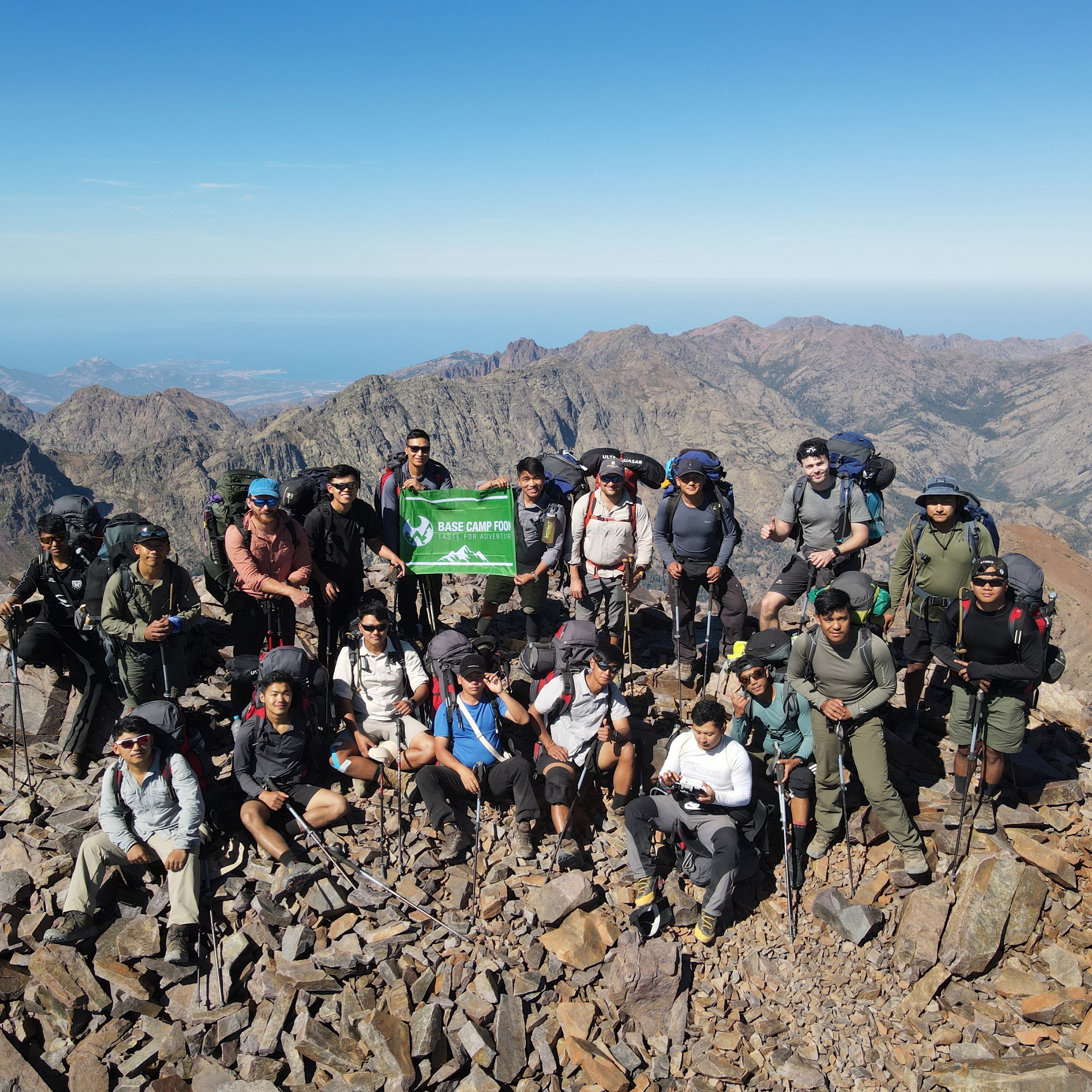
We were proud to support The Royal Gurkha Rifles as they completed one of Europe’s most demanding trekking routes: the GR20 in Corsica. This gruelling nine-day expedition was more than just a test of endurance - it played a vital role in the Gurkhas’ mountain operations training, sharpening navigation, leadership and teamwork in challenging alpine conditions.
In this Q&A, the Gurkhas share their experiences from the trek: from carrying heavy packs across jagged granite ridges to managing extreme weather, staying fuelled with Base Camp Food’s high-calorie meals and applying the lessons learned to their military expertise. They also reflect on the unique spirit and discipline that define the Gurkha ethos, showing how tradition and modern training combine to prepare them for the toughest environments.
Read on to discover the challenges, triumphs, and insights from this incredible Corsican adventure.

1. The GR20 is known as one of Europe’s toughest trekking routes. What made your team choose Corsica for this particular expedition?
The key reasons for selecting the GR20, known as Europe's toughest trekking route, were:
• Development of Key Military Skills: Adventurous Training is a formal part of military training designed to enhance an individual's ability to withstand the rigours of operations. The GR20's relentless ascents, steep technical descents, and exposed ridgelines were ideal for testing and developing soldiers' endurance, resilience, teamwork, leadership and motivational skills.
• Rugged and Challenging Terrain: The route's difficulty - involving jagged rock scrambles, difficult navigation and significant elevation changes provided a challenging environment to stretch comfort zones and overcome multiple difficulties, building confidence and ability for future challenges.
• Qualification Opportunity: The expedition also served a training purpose, allowing personnel to achieve the Summer Mountain Foundation Course (SMF) qualification, a valuable addition to their military skills.

2. You carried heavy packs and stayed fully self-sufficient throughout the journey - what did your daily routine look like on the trail?
Waking at first light, the team covered rocky miles with heavy packs, utilising map-reading and teamwork. Meals featuring the good Base Camp Food's 1000-calorie portions were awesome for maintaining energy. Daily, we covered around 8-15 KM in distance.

3. The terrain on the GR20 is notoriously unpredictable. What were some of the biggest physical and mental challenges you faced during the nine days?
The main challenges were the relentless ascents and technical descents over jagged, loose granite with heavy military loads. Mentally, the strain came from extreme fatigue, difficult navigation in thick mist and maintaining discipline across the exposed ridgelines.

4. How did completing the Summer Mountaineering Foundation (SMF) qualification during this expedition help strengthen your mountain operations training?
The SMF provided foundational, certified competence in essential mountain skills. This directly strengthened operations training by formalising safe navigation (map/compass), group leadership, hazard management (steep ground) and expedition logistics, ensuring self-sufficiency for movement and survival in challenging summer terrain.
5. Teamwork is a defining part of the Gurkha spirit. Can you share a moment on the expedition where that teamwork really shone through?
The teamwork shone through in the mutual support that sustained the team across the gruelling nine-day route. Facing heat exhaustion, slippery granite and heavy loads, their discipline and shared determination to maintain momentum and complete the entire GR20 together exemplified the core Gurkha spirit.

6. Weather conditions ranged from scorching sun to thick mist and rain - how did you adapt to such extreme changes while staying on course?
We countered scorching heat by starting early and managing water/pace. We filled up the water on the way through running streams. During thick mist and rain, we had self-sufficient clothing carried on our backpacks to embrace the weather.
7. Nutrition and energy are critical on long expeditions like this. How did Base Camp Food’s meals help you stay fuelled and focused along the way?
Base Camp Food’s lightweight, high-calorie dehydrated meals provided the dense fuel needed for long, strenuous days. Being quick and easy to prepare meant less time cooking and more time resting, ensuring sustained energy and mental focus throughout the nine-day crossing.

8. For many of you, this was as much about learning as endurance. What are the key skills and lessons you’ll take from the GR20 back into your military work?
The expedition reinforced advanced mountain navigation in poor visibility, dynamic risk assessment on steep terrain and maintaining high morale under extreme fatigue. These are critical for conducting safe and effective mountain operations.

9. The Gurkhas have a long history of excellence in mountainous terrain. How does modern training like Expedition CORSICAN GURKHA build on that proud tradition?
Expedition CORSICAN GURKHA builds on tradition by taking the Gurkha's inherent mountain resilience and discipline (kaida) and applying it to a new challenge. It certifies their skills (SMF qualification) in modern, demanding European terrain, ensuring their light infantry excellence is continually updated for contemporary operations
10. Finally, how did it feel to complete the route and reach the end - and what message would you share with others taking on their own mountain challenges?
Reaching the end brought immense relief and pride, a significant achievement of physical and mental toughness. Our message: Commit to your preparation, embrace the inevitable discomfort and let mutual support and determination (kaida) carry you to your summit.